


Laser and IPLare not the same technology
The truth about laser hair removal
A bold promise does not prove treatment quality. Check the salon's official status, the exact device model and origin, its service history, and whether the specialist clearly explains realistic results and limitations.
A genuine salon does not hideits address, documents or fiscal receipt
More wattsdoes not mean a better result
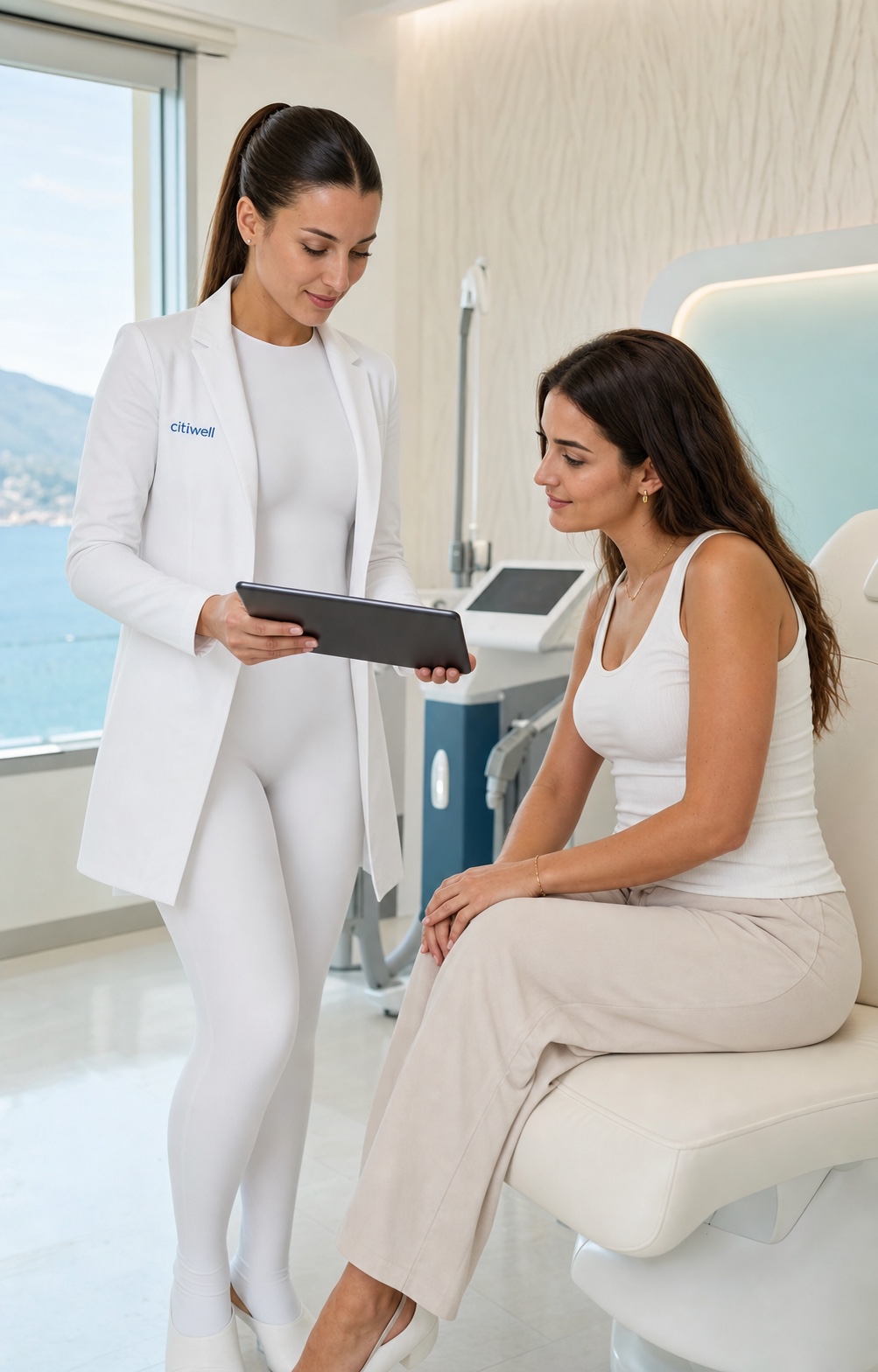
What result from laser hair removal is genuinely realistic
Laser hair removal can produce a long-term reduction in the amount and rate of hair growth, but it cannot promise complete removal forever. Results depend on hair colour and thickness, skin phototype, treatment area, hormonal factors, device parameters and the intervals between sessions.
After a course
There is noticeably less hair, it grows more slowly and usually becomes finer. Smooth periods become longer.
Why several sessions are needed
The laser acts on hairs in the active growth phase. Only some hairs are in that phase at any one time, so the result develops gradually.
What an honest answer sounds like
A specialist does not promise everyone the same result. They assess the skin and hair, explain a realistic goal and say in advance that maintenance sessions may be needed over time.
Promise versus reality: what should make you cautious
Misleading advertising sounds simple and certain. A professional answer includes the exact model, conditions, limitations and a way to verify the claim.
Each claim below is broken down separately: what to ask, what answer a specialist should give, what it means and when it is better to walk away.
Claim: “100% of hair disappears forever”
- 1. What to ask
- What result is possible for me, and will I need maintenance sessions?
- 2. A reasonable answer
- An honest goal is a long-term reduction in the amount and rate of hair growth. A percentage and number of sessions cannot be guaranteed in advance.
- 3. What it means
- The laser acts on pigmented hairs in the active growth phase. Some hair may reappear over time.
- 4. When to walk away
- “We guarantee 100% forever — you will never need maintenance.”
Claim: “Completely painless; burns are impossible”
- 1. What to ask
- What sensations and reactions are possible, and how do you select settings and cool the skin?
- 2. A reasonable answer
- Sensation depends on the area, skin, hair and settings. Cooling reduces discomfort and risk, but it cannot eliminate them completely.
- 3. What it means
- Heat, tingling and temporary redness are possible. Incorrect settings can cause a burn or a change in pigmentation.
- 4. When to walk away
- “You will feel nothing, and a burn is impossible with our device.”
Claim: “Suitable for every skin type and every hair colour”
- 1. What to ask
- Which hairs can the device not target, and how will you account for my phototype, tan and hair colour?
- 2. A reasonable answer
- Laser works best on pigmented hair. Grey and white hair, and often very light or fine hair, responds poorly or not at all.
- 3. What it means
- Darker or tanned skin requires suitable technology and cautious settings. There is no unconditional one-size-fits-all solution.
- 4. When to walk away
- “We remove even grey and white hair, on every phototype, with no limitations.”
Claim: “Three lasers in one — three times more effective”
- 1. What to ask
- Which light sources are inside the device, and how much energy is delivered at each wavelength?
- 2. A reasonable answer
- A multi-wavelength system can be a valid technology, but three wavelengths alone do not prove superiority or deliver three times the result.
- 3. What it means
- The exact model, clinical data, fluence, pulse duration, spot size, cooling and settings all matter.
- 4. When to walk away
- “Three wavelengths automatically work three times better than one diode laser.”
Claim: “5000 W means the laser is more effective”
- 1. What to ask
- What exactly is measured in watts: the power supply, diode stacks, peak power or optical output?
- 2. A reasonable answer
- An honest specialist will explain not only the wattage but also fluence in J/cm², pulse duration, spot size, frequency and cooling.
- 3. What it means
- A large number may affect a device's capacity and speed, but on its own it does not show the dose delivered to the skin or predict the result.
- 4. When to walk away
- “The more watts, the more hair is removed — the other parameters do not matter.”
Claim: “Results after the first visit; only 3–4 sessions”
- 1. What to ask
- What counts as a result after one session, and why am I being promised a fixed number of sessions?
- 2. A reasonable answer
- Some treated hairs may shed after the first session. The full course depends on the area, growth cycle, skin, hair and hormonal factors.
- 3. What it means
- Rapid shedding is not the final result. Hairs are in different growth phases, so repeat sessions and sometimes maintenance are needed.
- 4. When to walk away
- “After three sessions there will be no hair left — the same for everyone.”
How to distinguish a genuine salon from a room that merely calls itself one
A genuine salon does not hide who provides the service. An Instagram page, payment to a personal account and a tidy treatment bed do not replace a registered business, sanitary conditions and a fiscal receipt.
What should be visible without asking
- The salon name and details of the entity taking payment
- Opening hours at the entrance or in a clearly visible place
- An up-to-date price list in euros and package terms
- Information on where and how to submit a complaint
- A fiscal receipt after payment
What documentation the salon keeps
- CRPS registration and craft registration
- Sanitary approval for the business premises
- Employee sanitary records and training
- A complaints book or electronic register
- Purchase, import and service documents for the device
The device must have a traceable origin and service history
CE marking relates to the product itself, but it does not explain where the device came from or who is responsible for its supply, installation and service. The exact model and serial number should be traceable through documents.
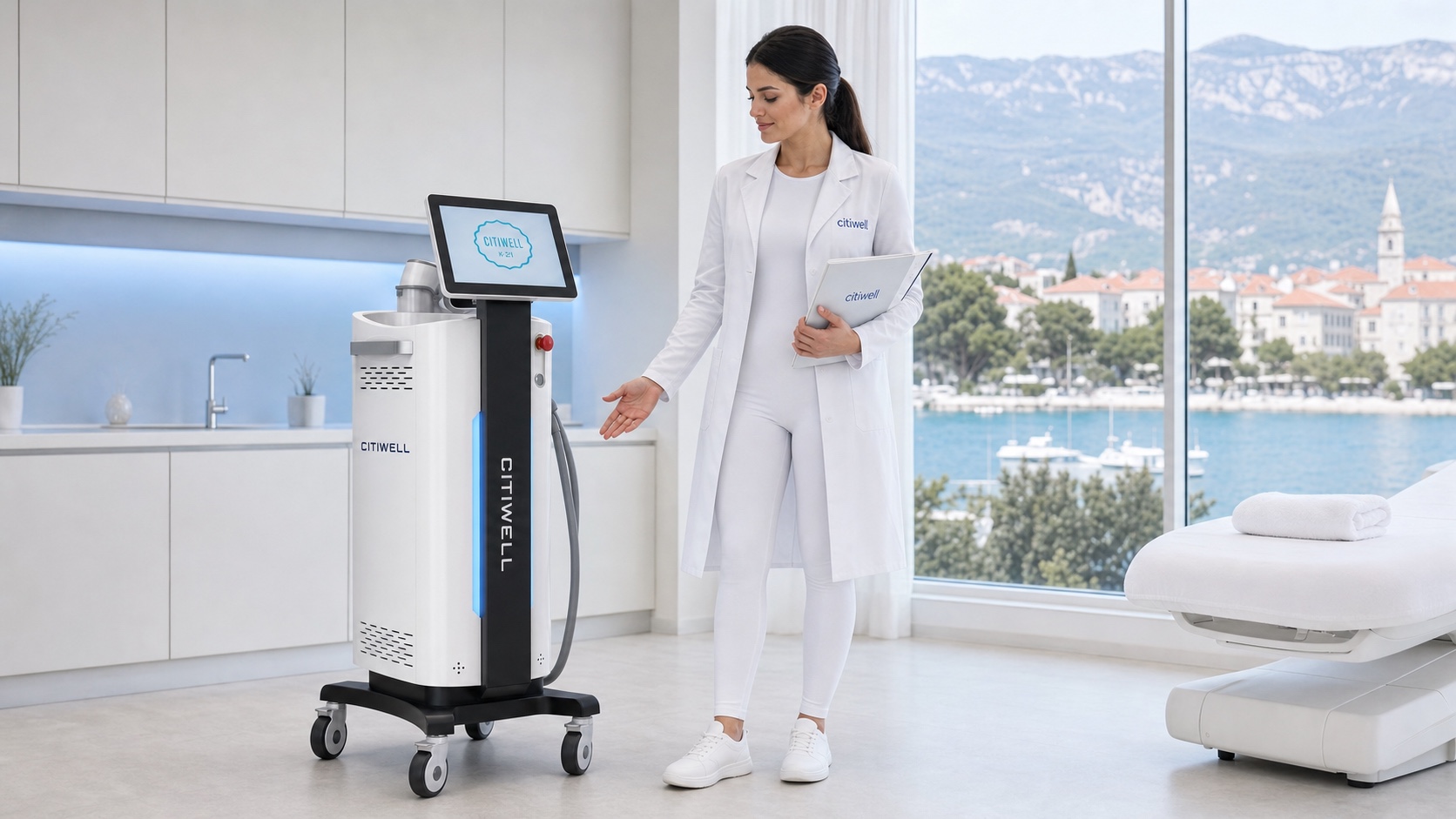
Not a marketing name, but a specific device
A serious salon knows the exact model, manufacturer, serial number, supplier and responsible service company. “It is a professional laser” is not an adequate answer about the equipment's origin.
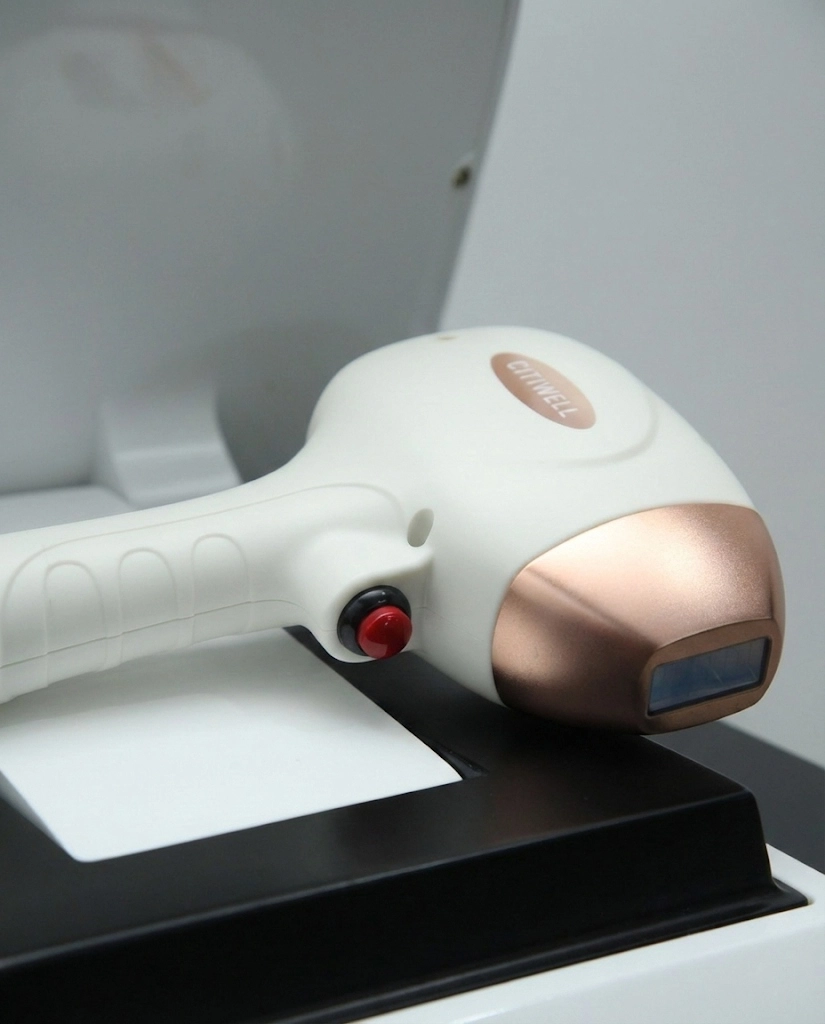
- Label on the housingThe model and serial number are legible and match the documents.
- Traceable supplyThere is an invoice or purchase agreement and, where the device was imported directly, customs documentation.
- Responsible service providerIt is clear who inspects, repairs and services the device.
Model and serial number
The label on the housing matches the manual, purchase documents and service history.
CE and declaration of conformity
The documents apply to a specific product. They are not a quality certificate for the salon or the treatment.
Origin and official import
The supplier or importer can be identified and the particular device traced to the salon.
Who is responsible for the device
The service company, date of the last inspection and work performed on the specific model are identified.
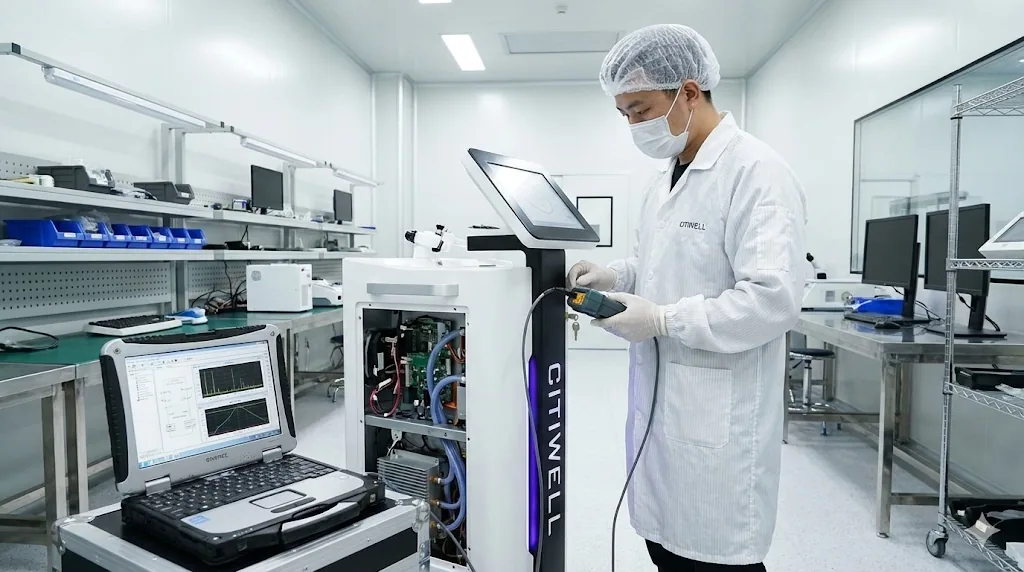
What is checked during regular servicing
Intervals depend on the model and the manufacturer's service schedule. What matters is not a promised “lifetime handpiece”, but a clear record of diagnostics, replacements and repairs.
- Optical outputActual energy output and calibration.
- CoolingCirculation, sensors and coolant.
- Handpiece and optical windowOptical condition, cleaning and diagnostic readings.
- Filters and consumablesReplacement according to the specific system's schedule.
- Faults and repairsRecorded faults and replaced components.
- Service logDate of work and the responsible organisation.
Diode, IPL and alexandrite in plain language
Similar flashes do not make technologies identical. It is important to understand which light source is inside the device, which skin and hair it suits, and how the specialist controls the settings.
Citiwell does more than use equipment
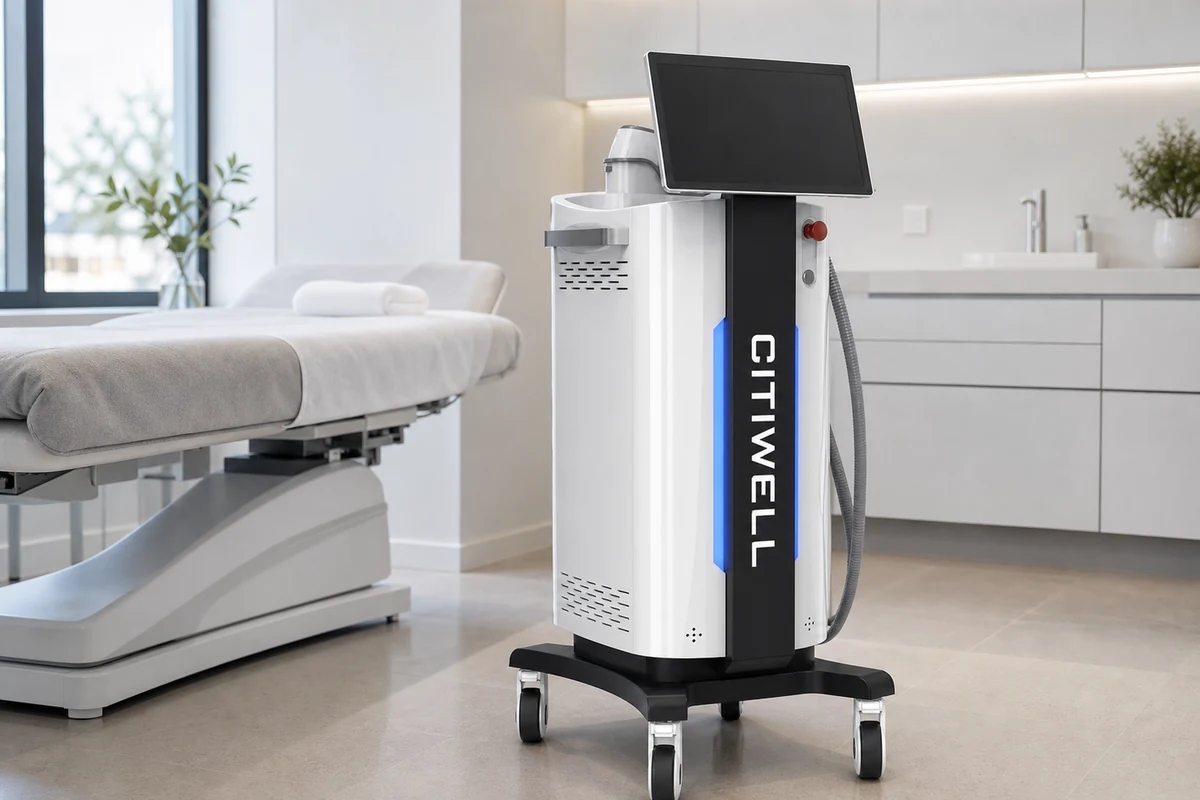
The K-21 working configuration comes from Citiwell's full lifecycle: our engineering team develops the equipment, the manufacturing division produces and controls it, the training centre prepares practitioners, and practitioners in our own studios provide feedback from daily use. This connects the technical standard, service and operating protocols across the network. Process control does not replace individual skin and hair assessment or guarantee identical results for everyone.
808 nmtarget wavelength
Sapphirecontact window
ICE Chillcompressor cooling
Learn more about Citiwell K-21 ICE Chill
Citiwell's choice: diode
808 nm diode laser
One technology across the network. Citiwell chose an 808 nm diode system to standardise settings, contact cooling, practitioner training and technical service across all studios.
- A defined 808 nm operating wavelength
- One controlled network standard
- Contact cooling helps make the sensation gentler
This is not a laser
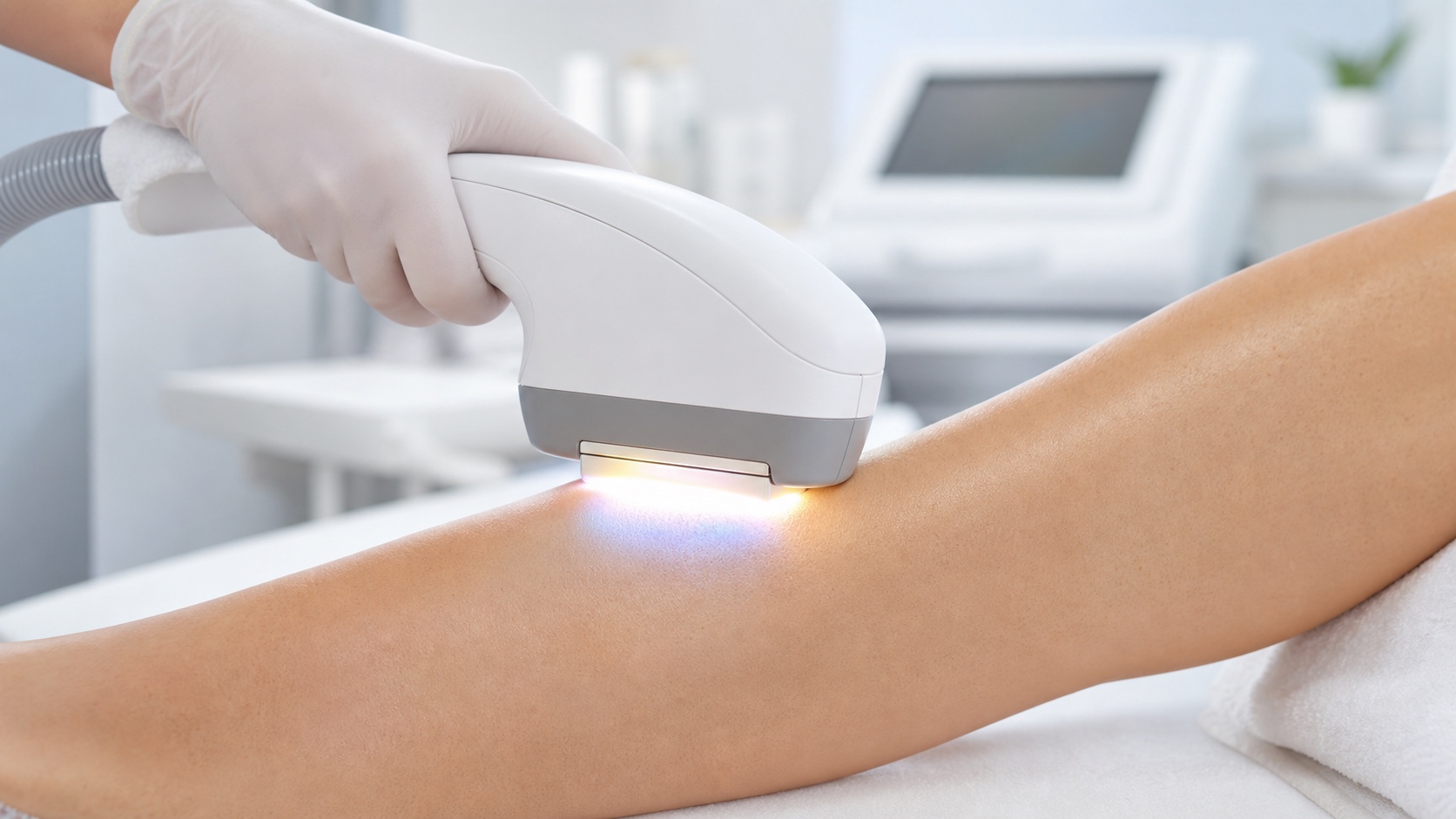
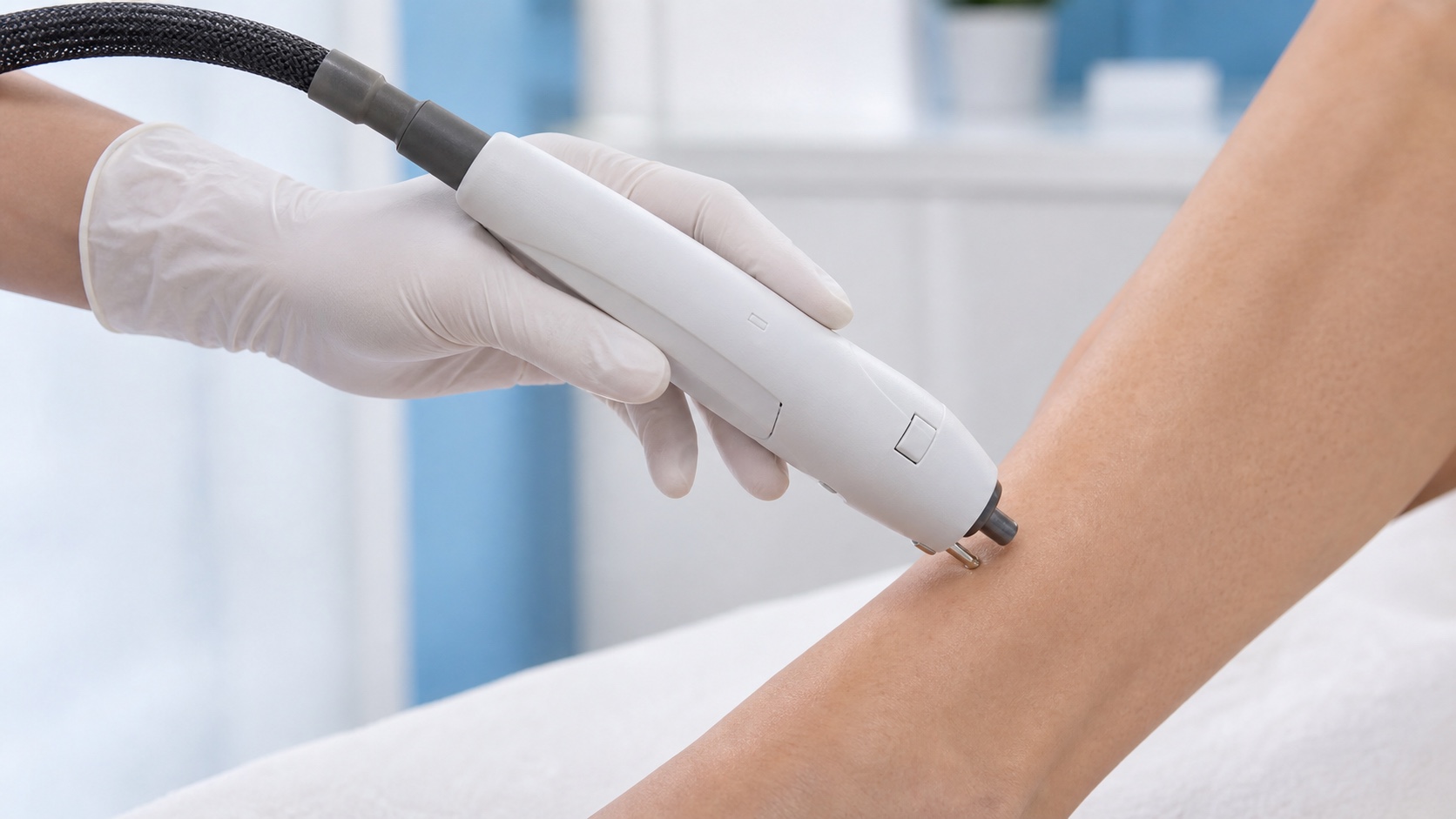
IPL: a light flash, not a laser
IPL sends a broad spectrum of light through filters. It is often sold under the general label “laser hair removal”, even though there is no laser source inside.
- Broad-spectrum light instead of one laser wavelength
- More dependent on filters, the model and lamp condition
- Often disguised by the words “laser hair removal”
A true laser
755 nm alexandrite
An alexandrite device is a true laser. Its 755 nm wavelength is strongly absorbed by melanin and is widely used, particularly for dark hair on fair, untanned skin. As with any laser system, the practitioner must account for phototype, tanning, hair and treatment area.
- Settings depend on phototype and tanning
- A true laser, unlike IPL
- Sensation depends on cooling, area and settings
Our choice: a professional 808 nm diode system as one network standard. IPL is not a laser; diode, alexandrite and Nd:YAG devices are true lasers. Each technology has its own applications. Citiwell chose a diode system because its settings, contact cooling, training and service can be standardised consistently across the network. The appropriate technology and settings depend on skin, hair and treatment area.
10 questions to ask before paying
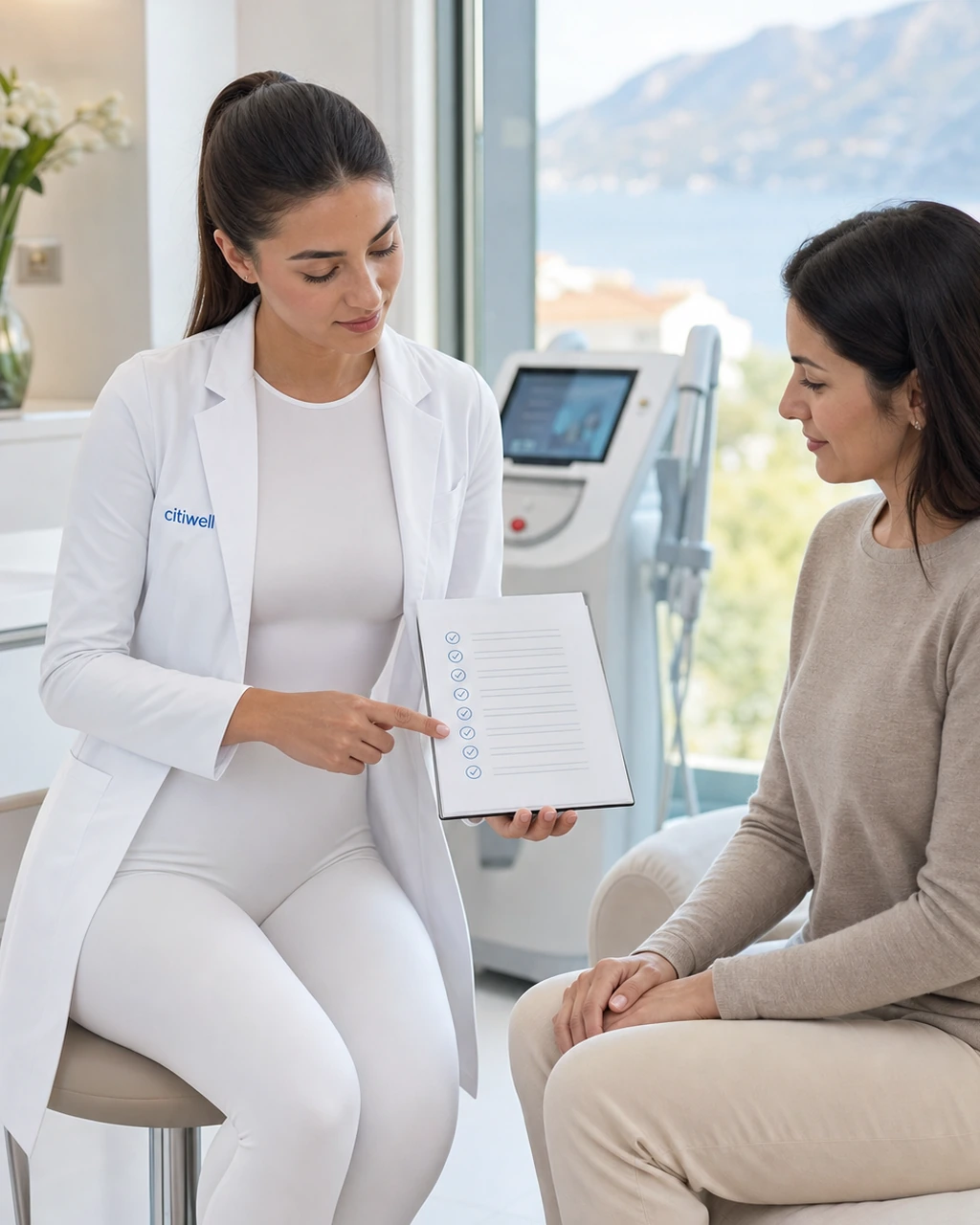
Save the list and open it during your consultation. Evasive answers or irritation from the specialist are reasons not to rush.
- Who is the manufacturer and what is the exact device model?
- Is this a laser or IPL?
- Who supplied or imported the device, and what documents prove its origin?
- Why is this technology suitable for my skin and hair?
- What training have you completed on this specific system?
- When was the device last serviced?
- What result is realistic, and what do you not guarantee?
- What reactions are possible, and what do you do if a complication occurs?
- Does the premises have business status and sanitary approval?
- Will I receive a fiscal receipt, and who can I contact after the treatment?
Continue preparing
Citiwell's short practical guides will help you prepare for your first visit and look after your skin afterwards.
 Questions and answersStraight answers before your first treatment
 How to prepareWhat to do before visiting the studio
 AftercareSimple rules for calm skin
 A new guide is comingAnother detailed guide will be added soonComing soon
Sources and documents
Official Montenegro rules for salons, fiscalisation and equipment imports, together with scientific publications on laser technologies.
Consumer protection: prices, receipts and complaints
Craft activity law
Official register of craftspeople
Sanitary inspection checklist for salons
Opening hours and trade services
Electronic fiscalisation of services
Customs procedures and official import
What CE marking confirms
Why fluence, pulse and individual settings matter
Adverse reactions and risks of laser hair removal
Why laser cannot target white, grey and red hair effectively
What has been studied about triple-wavelength diode systems
Comparison of diode laser and IPL
Comparison of diode and alexandrite lasers
Penetration depth of 755 and 810 nm wavelengths
Pigmentary reactions after alexandrite treatment
Comparison of sensation across different systems