


808 nmoperating wavelength
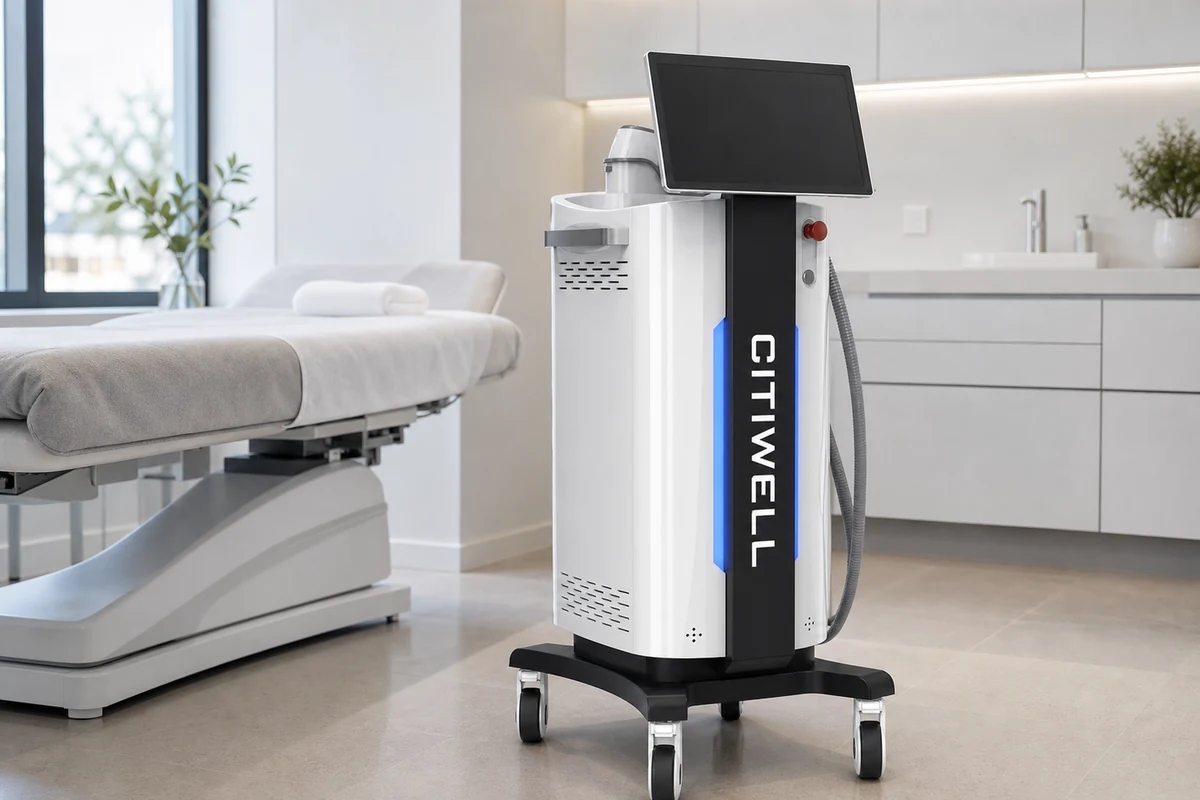
This is the laser we use Citiwell K-21 ICE Chill
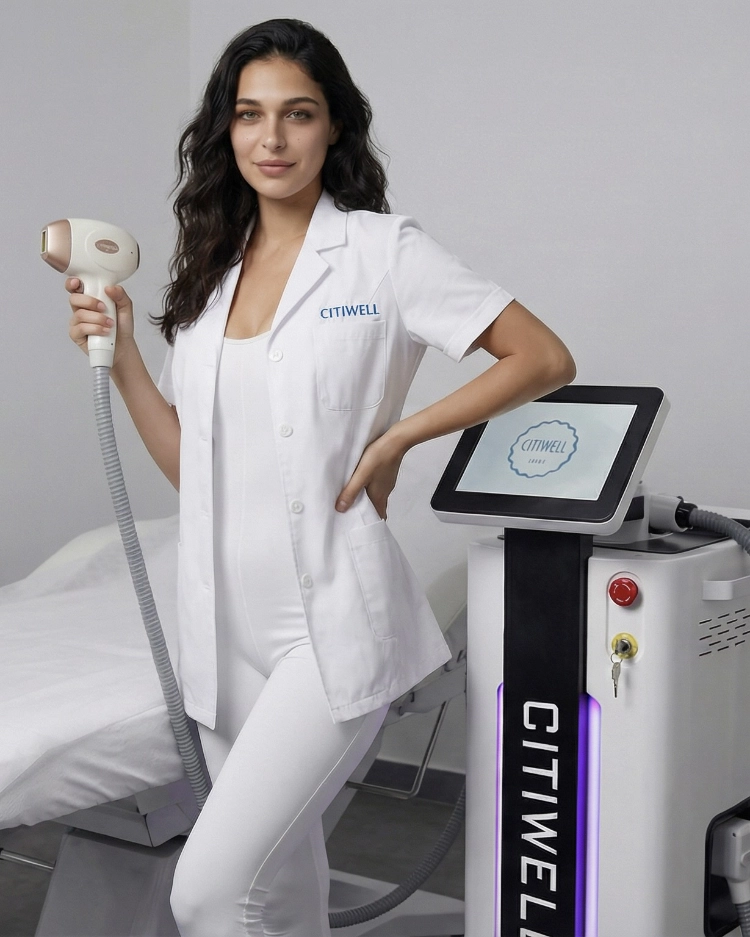
Citiwell brings equipment engineering and manufacturing, practitioner training, technical service and the daily experience of practitioners in our own studios into one system. That is why we show the actual device and explain clearly how its settings, cooling system and safety protocol work.
A specialist selects the settings after assessing your skin and hair.
1600 Wemitter power
down to −5 °Ccontact cooling
CE marking and CInMEDconformity and authorisation
Not magic. Controlled physics.
Energy is directed at the pigment in the hair and converted into heat inside the follicle. The surrounding skin is cooled by the contact tip at the same time.
-
1
Melanin becomes the target
Pigment in the hair absorbs light more readily than the surrounding tissue.
-
2
The 808 nm pulse reaches the root
The wavelength is selected to work effectively with pigmented hair.
-
3
The follicle receives heat
The specialist sets the energy and pace for the area, skin and hair thickness.
-
4
Treated hairs shed gradually
Not all hairs grow at the same time, so consistent growth reduction requires a course of treatments.
The laser works on hairs in the active growth phase. The number of treatments and the intervals between them are individual rather than one fixed number for everyone.
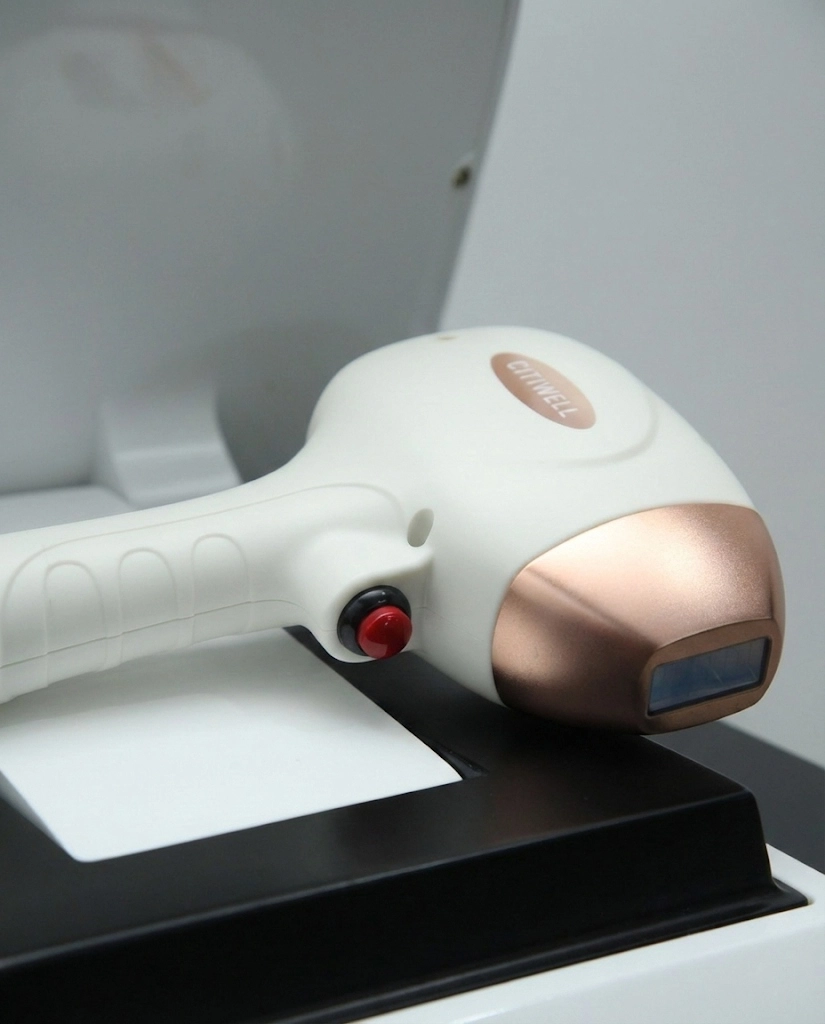
Three systems work together
A good result depends not on one large power figure, but on the coordinated work of the emitter, skin contact and cooling.
808 nm diode energy
The Citiwell configuration is designed for controlled energy delivery to pigmented hair.
Sapphire contact window
Even contact helps deliver each pulse predictably and protects the skin surface.
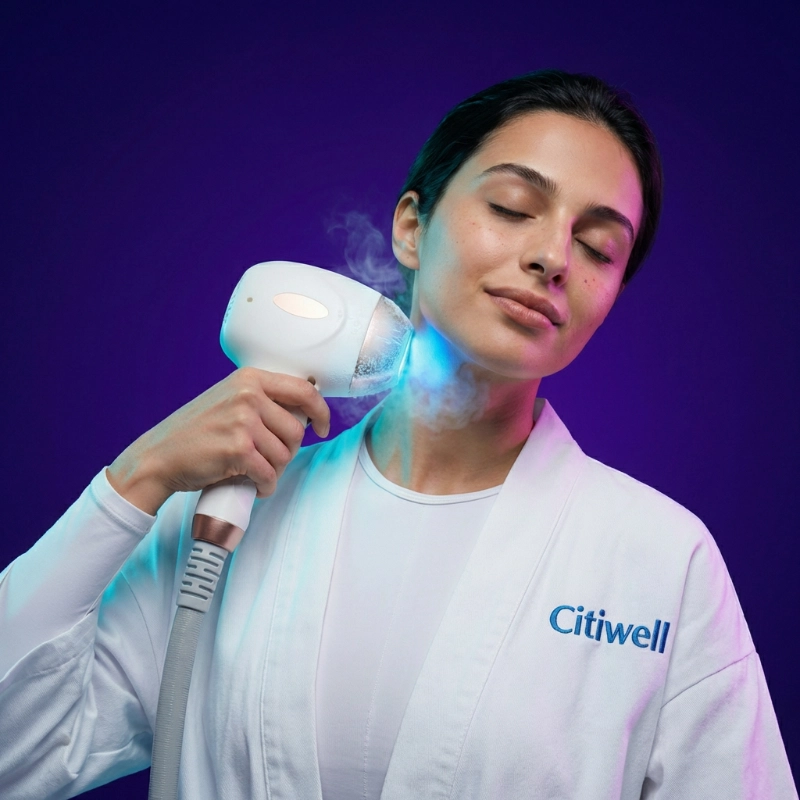
Compressor cooling
The tip cools down to −5 °C, reducing the sensation of heat during a series of pulses.
Cooling reduces discomfort, but we do not promise the impossible
During treatment, you will usually feel the cool tip, brief warmth or a light tingling sensation. Sensations may be more noticeable on sensitive areas.
Cool firstThe tip pre-cools the skin.
Brief pulseYou may feel warmth or tingling.
Continuous monitoringTell the specialist how you feel and pause at any time.
Sensations are individual. Their intensity depends on the area, hair density, skin sensitivity and selected settings.
Technical specifications that matter
| Technology | Diode laser |
|---|---|
| Operating wavelength at Citiwell | 808 nm |
| Emitter power at Citiwell | 1600 W |
| Available spot sizes | 12 × 16 / 20 / 24 / 28 mm |
| Pulse frequency | up to 10 Hz |
| Laser bars | Coherent, USA |
| Display | 15.6″ LCD touchscreen |
| Cooling | compressor cooling, contact down to −5 °C |
The model series is available in several configurations. The 808 nm and 1600 W values refer to the devices used in Citiwell studios.
Safety depends on more than a label on the device
Device documentation matters, but a safe treatment also depends on properly maintained equipment, a qualified specialist and accurate information from the client.
Equipment
- scheduled maintenance and checks
- fully functioning contact cooling
- original handpiece and components
Citiwell specialist
- assesses skin, hair and tanning
- checks for contraindications
- selects and monitors settings
Client
- shares relevant health and medication information
- follows preparation guidance
- follows aftercare guidance
What happens before the first pulse
- 01
Brief consultationThe specialist checks contraindications, medication, tanning and skin response.
- 02
Hair and area assessmentHair colour, density and thickness, as well as the sensitivity of the area, all matter.
- 03
Selecting settingsSettings are selected for the specific area rather than copied automatically from a previous visit.
- 04
Monitoring during treatmentThe specialist monitors the skin and adjusts the treatment within the protocol.
Results develop gradually
The goal of a laser hair removal course is long-term hair-growth reduction. A single treatment cannot affect follicles that are not in the active growth phase at that time.
Growth phase
The laser works best on hair in the active growth phase, so treatments are repeated at intervals.
Colour and thickness
Dark, pigmented hair usually responds better. Blonde, red and grey hair may respond less strongly.
Area and hormonal factors
The face and hormone-sensitive areas may require a different schedule and number of treatments.
Treatment intervals
The next appointment is timed according to regrowth, not only by the calendar.
How progress is assessed
hair grows back less frequently some hair becomes finer smooth periods become longer
What you can verify
For every laser, documentation covering CE conformity, CInMED authorisation, technical specifications and service is kept in the treatment room. Clients can inspect it at the studio; document numbers, dates and scans are not published for unrestricted public access.
CE marking
The CE marking means that the manufacturer declares conformity with applicable EU requirements; it is not a European quality certificate.
FCC
Documentation covering electronic equipment and electromagnetic compatibility requirements.
RoHS
Confirmation of compliance with restrictions on hazardous substances in electronic equipment.
EAC / Rostest
Documentation showing compliance with the technical regulations for the relevant market.
CInMED authorisation
Documentation for every laser is kept in the treatment room and is available for clients to inspect at the studio.
Service and checks
Checks of the device and cooling-system condition.
Clear answers before you book
Is the treatment completely painless?
We do not promise a completely sensation-free treatment. Cooling helps reduce discomfort, but sensitivity depends on the area, hair density and individual response. Most people feel cold, brief warmth or light tingling.
How many treatments will I need?
An exact number cannot be promised in advance. It depends on the area, hair colour and thickness, growth phase and hormonal factors. The specialist reviews your progress and recommends the next interval based on actual regrowth.
Why not simply use the maximum power?
Effectiveness is not determined by the largest number on the screen, but by sufficient energy with a safe skin response. Settings must match the skin type, hair and treatment area.
Does a diode laser work on blonde or grey hair?
The laser needs melanin pigment. Dark, pigmented hair usually responds better. Very light, red and grey hair may respond weakly or not at all, so it is important to discuss this before paying for a course.
Can I have treatment in summer?
Yes, provided there is no fresh, active tan and you follow the sun-protection guidance. The specialist will always assess the area before treatment.
Would you like to see the device and find out whether it suits you?
Open the contact form. An administrator will help you choose a studio, and a specialist will assess your skin and hair before treatment.
The information on this page is general. Individual guidance from a specialist after assessing your skin, hair and relevant health information takes priority.